


Andō, the one-Michelin-star restaurant that is best defined as an exploration of East-meets-West innovation, begins a new culinary chapter this year with a limited-time tasting menu that is designed as a tribute to Hong Kong’s terroir and agricultural past. On the pedestal: the humble rice grain.
“Field to Table: The Yi O Rice Menu” is the first instalment in Andō’s new ingredient-focused dining series, each planned to run for roughly three months. Its inaugural edition—starring eight courses centred around Yi O Rice—was conceived to reveal the multifaceted qualities of the treasured food staple using meticulous preparation and creativity to showcase rice’s versatility in numerous forms.
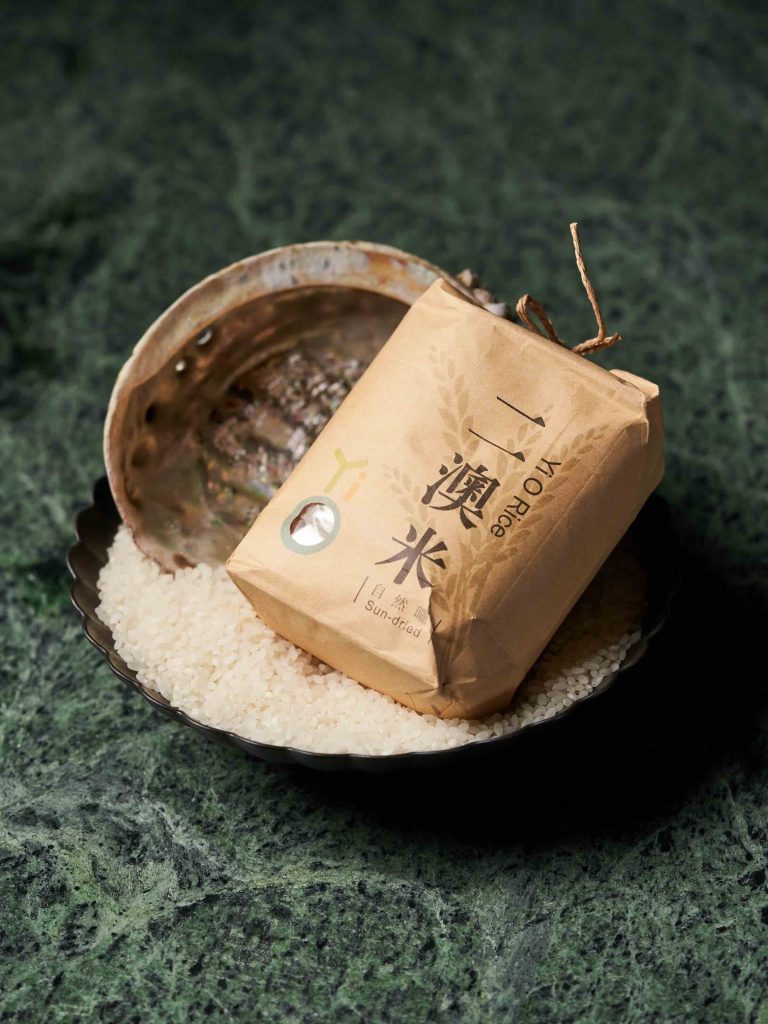
Rice paddies were once a common sight in the city, predominantly in the rural New Territories—the rice-farming business was a cornerstone of local agriculture. In the 1970s, however, farmers started abandoning their lands as opportunities began to shift to urban industrial sectors. Back in Hong Kong’s rice production heyday, Yuen Long served as one of the leading production areas. In 2013, the farmlands of Yi O on Lantau Island, an ancient village with more than two centuries of history, were once more flooded with promise: fields that had lain fallow were revitalised under the care of the Yi O Agricultural Cooperation to cultivate, among other crops, a cross-bred long-grain rice that is sun-dried and milled locally. In doing so, the Yi O Agricultural Cooperation not only safeguards Hong Kong’s rice-farming heritage, but also the rich legacy of the coastal village itself.
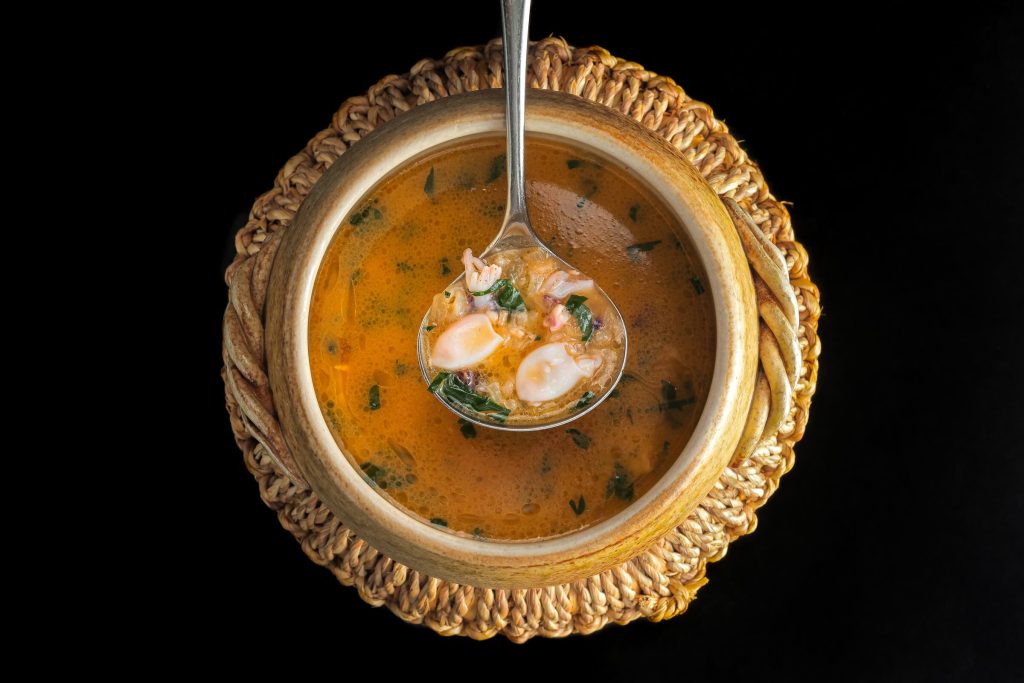
Andō’s chef-patron, Argentine native Agustin Balbi, made the trip out to Yi O last summer to understand the origin of the product, which formed a crucial part of the restaurant’s signature Sin Lola caldoso rice dish. It was this journey of learning and gaining insight into the time-consuming labour that goes into each rice grain that got the chef thinking about how to create an even greater tribute to local farmers and producers, and continue championing Hong Kong-made ingredients.
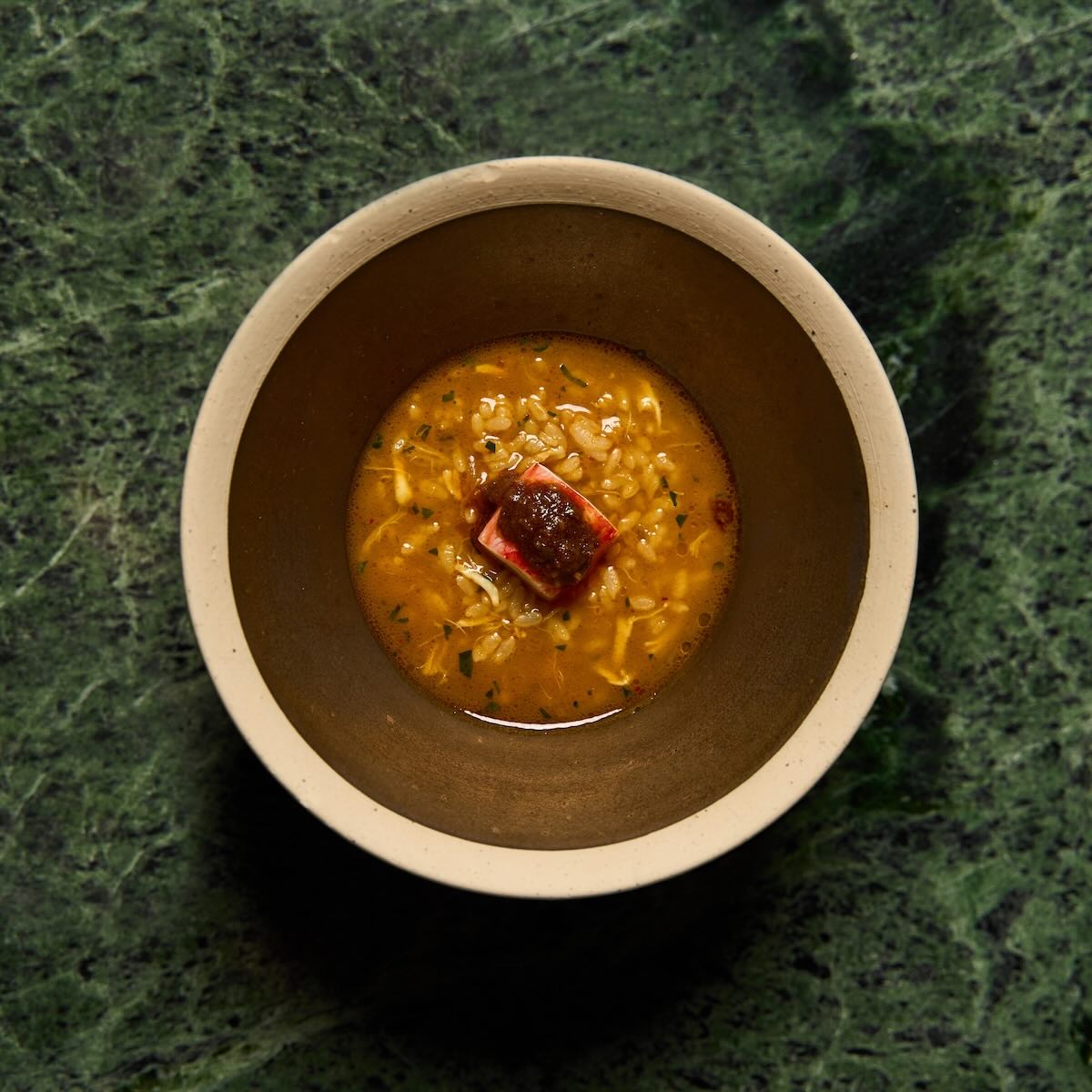
On the menu: a lineup of diverse dishes in which rice shines as the star, in forms simmered, stewed, steamed, fried, crisped, puffed, roasted, creamed, and fermented. Balbi threads harmonious connection between the ingredients, allowing for a sharp, focused, and intentional flavour experience, where each component has its rightful place. Begin with a trio of bocaditos—“little bites”—consisting of a crispy rice sphere with crab and a crown of caviar, a rice-paper roll with a filling of prawn and coriander, and an “onigiri” with marinated tuna, smoked soy, and chives.
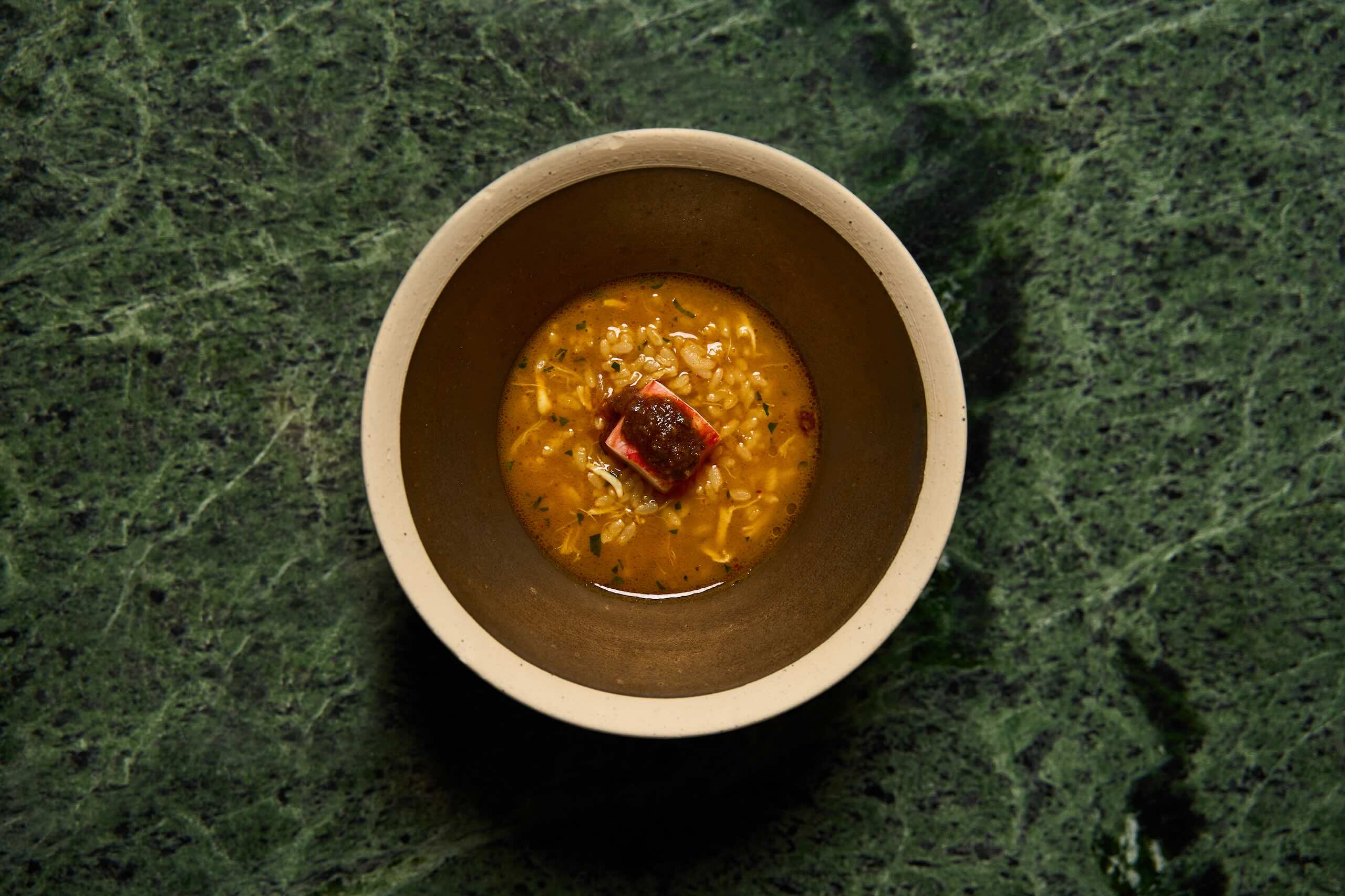
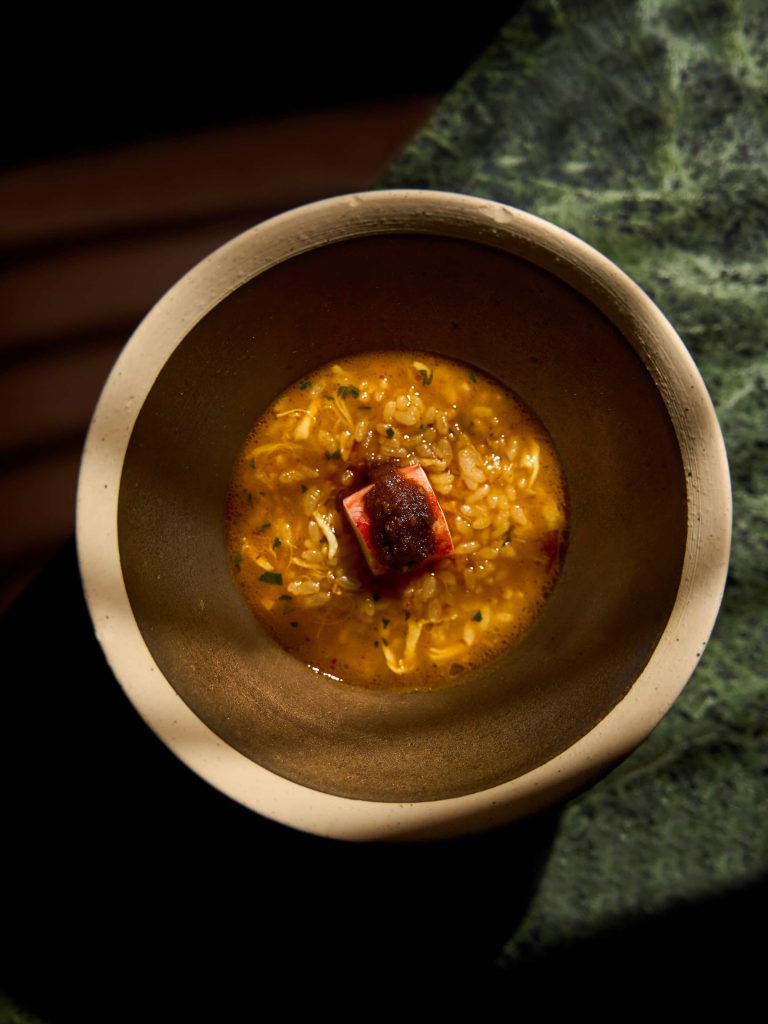
Bounties from the ocean, transformed as expressions of cultural and gastronomic identity, link back to Hong Kong’s fishing heritage in such dishes as the featherlight somen noodles, made with roasted rice, succulent sweet prawns, clam dashi, yuzu, and kinome leaf; the smoked isaki fish tucked between layers constructed of rice foam, Kristal caviar, ponzu gel, and topped with crispy rice pearls; the amadai fish, served in a sake sauce with baby bok choy, steamed rice, ikura, and sorrel leaves; and the brothy arroz caldoso, a reinvention of the rice soup that has become synonymous with the restaurant, this time reimagined with lobster and XO sauce.
In the pigeon de Racan, tender meat is matched with blueberry purée, red cabbage, and a delicate puffed rice cracker—a decadent departure from a principally seafood-focused menu. As the meal winds down, it leads to the arroz con leche, a rice pudding ice cream with sake gel, orange coulis, and a crisp rice tuile, sprinkled with puffed rice grains. For the grand finale, Balbi presents a quartet of mignardises: an irresistible caramelised rice ice cream, rice meringue with sake and apple, pillowy pistachio mochi, and an indulgent genmaicha chocolate truffle.
Alcohol pairings are also centred around the rice theme, with wine director Carlito Chiu—recipient of the 2025 Michelin Guide Sommelier Award—selecting such liquid accompaniments as Korean takju, Japanese aged sake, and Chinese Shaoxing wine, among others, to complement the eight courses.
Balbi has set aside dinner service on Mondays from now until the end of March to serve the Yi O Rice menu, not because of a lack of interest—on the contrary; with this limited-time initiative, Andō has tapped into a creative solution to combat what is traditionally the slowest day of the week in the F&B industry—but because of the limited yield from each harvest. Yi O, being a small farm tended to through manual means, is able to produce just two crops per year that are then reaped in the summer and winter. Demand for its organic rice far outstrips supply—the Yi O Agricultural Cooperation sells its popular Yi O Rice to restaurants as well as direct-to-consumer sales.
Due to the scarcity of local farming operations and the meagre amount of food that is cultivated here rather than imported, it’s refreshing to encounter a made-in-Hong-Kong ingredient given this level of reverence. In telling the agricultural tale of the city, Andō celebrates the role of rice as an irrefutable foundation—no longer a modest sideshow, but the heart of Hong Kong’s food history.
1/F, Somptueux Central, 52 Wellington Street, Central, Hong Kong
Tel: (+852) 9161 8697
All images courtesy of Andō.