


A ski home has been a favourite getaway for the ultra-rich ever since people started strapping sticks to their feet, but over the past two decades, they’ve become a lot more than just seasonal escapes—they’re serious lifestyle investments that increasingly offer year-round activities. According to the latest Savills Ski Report, which marks 20 years of tracking the global ski market, prices for prime ski properties have jumped a whopping 150 percent since 2006.
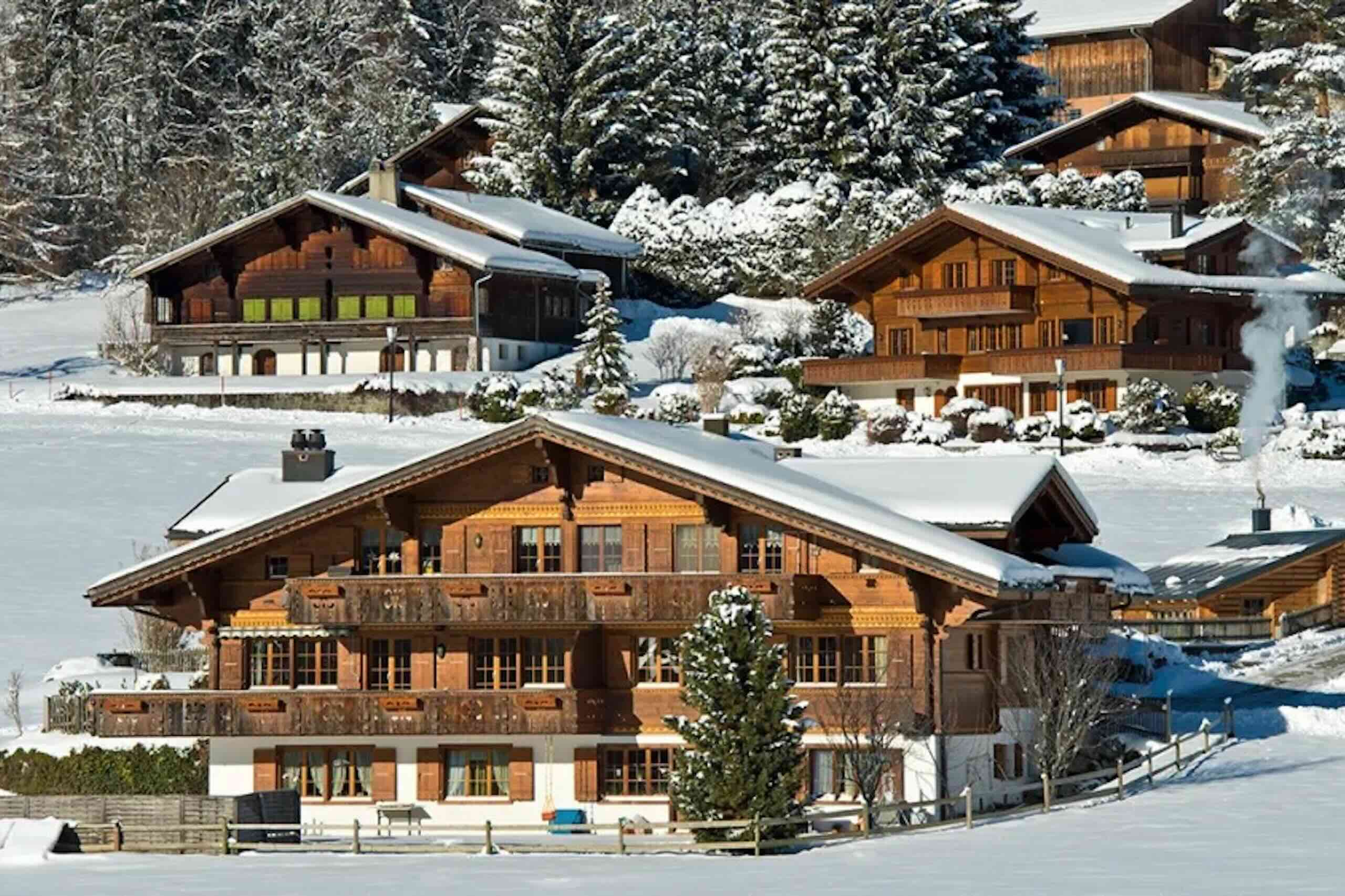
Switzerland has stayed steady through it all. Ski homes in the Alpine country are up seven percent in the past year and 20 percent over the last five, and over 20 years they’ve nearly doubled in value. Resort towns long popular with aristocrats and jet-setters, such as Gstaad and St Moritz, still draw buyers looking for privacy and stability, with ultra-luxury chalets in Gstaad selling for around €51,500 per square metre—about US$55,000/HK$468,870 per square foot.
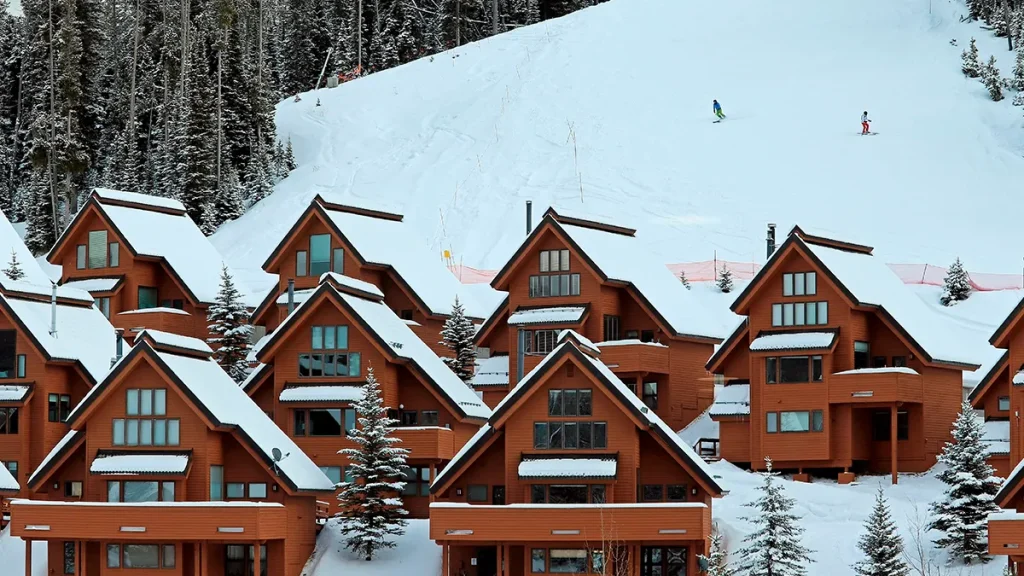
Image courtesy of Don & Melinda Crawford/Education Images/Universal Images Group via Getty Images
The US market is equally dramatic. Short-term numbers may look flat, but over 10 years, values have jumped 84 percent, and over 20 years, they’ve soared by 228 percent. Aspen continues to lead the pack, with prime homes averaging roughly US$3,750 (approximately HK$29,170) per square foot and ultra-prime homes going for around US$7,400 (HK$57,565) per square foot.
To put that into perspective, a contemporary log cabin on what’s known as Aspen’s Billionaire Mountain hit the market earlier this year for US$45 million (approximately HK$350.06 million), while a 6,180-square-foot home sold last year for a record US$66.5 million (HK$517.31 million), or US$10,761 (HK$83,710) per square foot. As it turns out, the most expensive home currently on the US market is in Aspen: Stewart and Linda Resnick’s Little Lake Lodge, a 74-acre compound with a 19,000-square-foot mansion listed for US$300 million (HK$2.33 billion), an amount that breaks down to a staggering US$15,790 (HK$122,835) per square foot.
Even with a brutal 10 percent dip last year, France is also seeing strong growth. Five-year gains are still a solid 31 percent, and 10-year gains are 58 percent, while the 20-year growth figures skyrocketed by 197 percent. High-altitude resorts like Val d’Isère and Courchevel 1850 are especially popular, thanks to reliable snow and international prestige.
Luxury listings in Courchevel 1850 illustrate the scale. They include a 3,123-square-foot chalet on the market for €8.4 million (about US$9.5 million/HK$76.46 million), which translates to US$3,043 (HK$23,670) per square foot, and an enormous 10-bedroom spread listed for €36 million (US$41.8 million/HK$327.71 million), or US$6,934 (HK$53,940) per square foot.
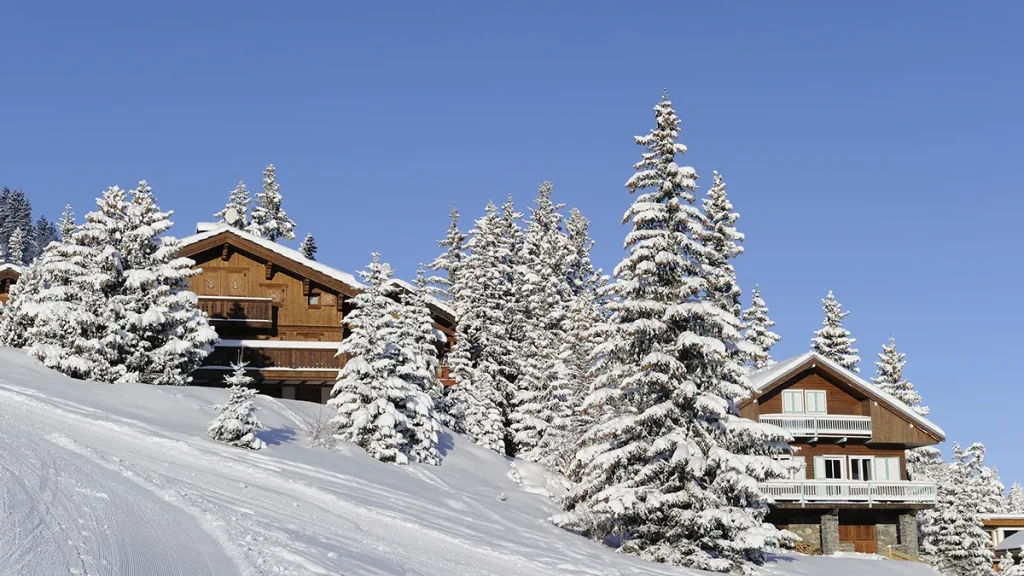
Image courtesy of JARRY/TRIPELON/Gamma-Rapho via Getty Images
Even with some ups and downs, prime-property values are still 27 percent above pre-pandemic levels, and demand is surging as wealthy individuals look for lifestyle escapes that double as investments, remote work makes mountain living more practical, and high-altitude, snow-reliable resorts offer long-term resilience against climate volatility.
“Despite continued economic uncertainty, prime ski property markets have proven resilient,” says Kelcie Sellers, associate director at Savills World Research. With more than 366 million skier visits worldwide in the 2024–25 season, owning a luxury ski home in Aspen, Val d’Isère, or Gstaad isn’t just about the perfect powder—it’s also about securing a prime piece of property in a market that just keeps climbing.